

If you’ve read my first guide to Athens, you already know what to expect when it comes to accessibility and getting around the city. Now comes the fun part!
As we saw, the Greek capital isn’t the easiest city to move around, especially if you use a wheelchair, but it is definitely doable, and it’s more than worth it as it’s full of history, culture, food and little gems that will make your experience memorable. Athens is a city that never really sleeps and you can have fun 24/7.
In this article, I am sharing places I love, and have visited and enjoyed myself. There are, of course, many more to explore, and I encourage you to do so. Till then, let’s trawheel (I need to secure the copyrights for this one) around Athens together!
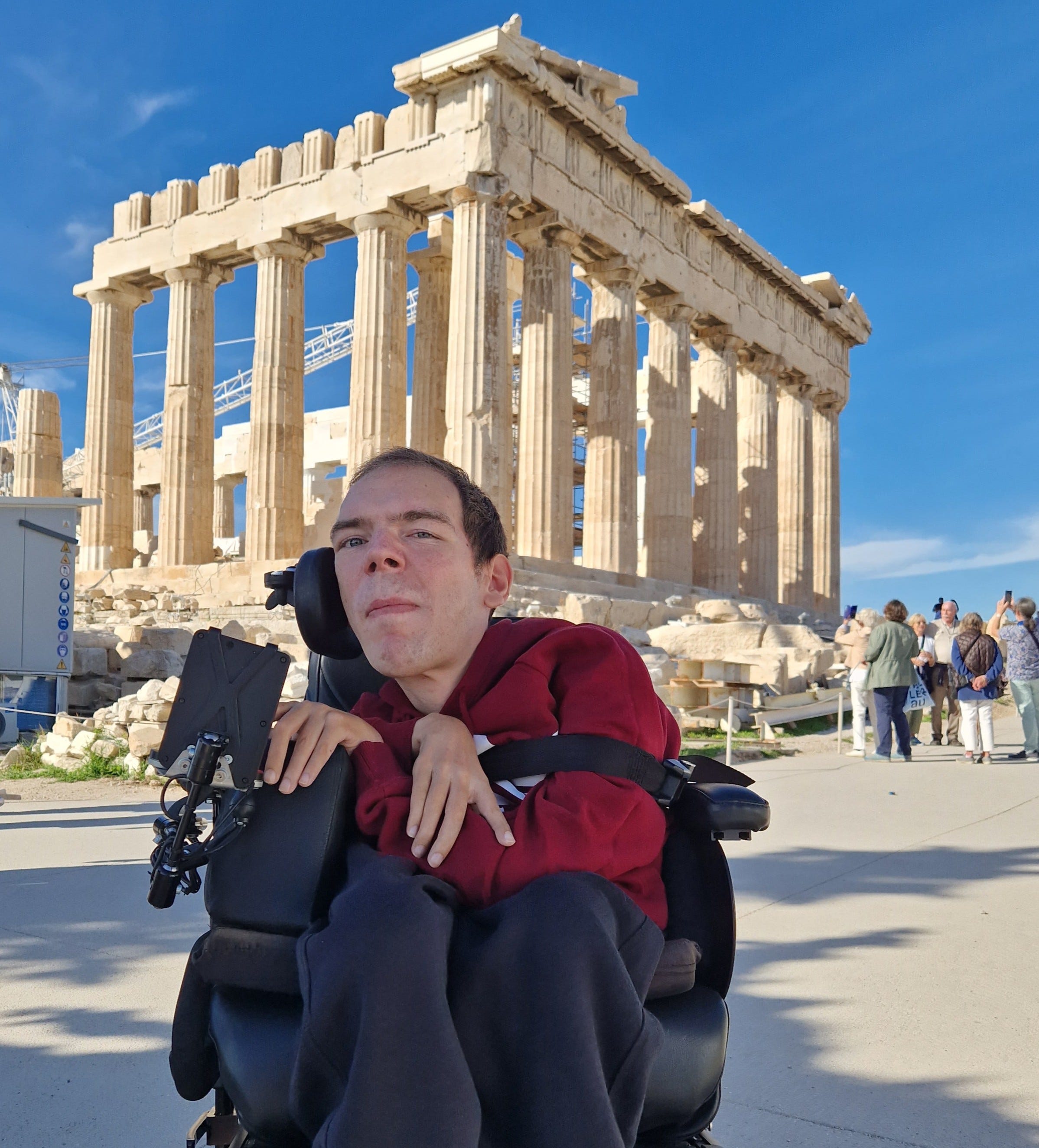
Acropolis and Odeon of Herodes Atticus
Well, no surprise here. Everyone should start with the Acropolis and the Parthenon!
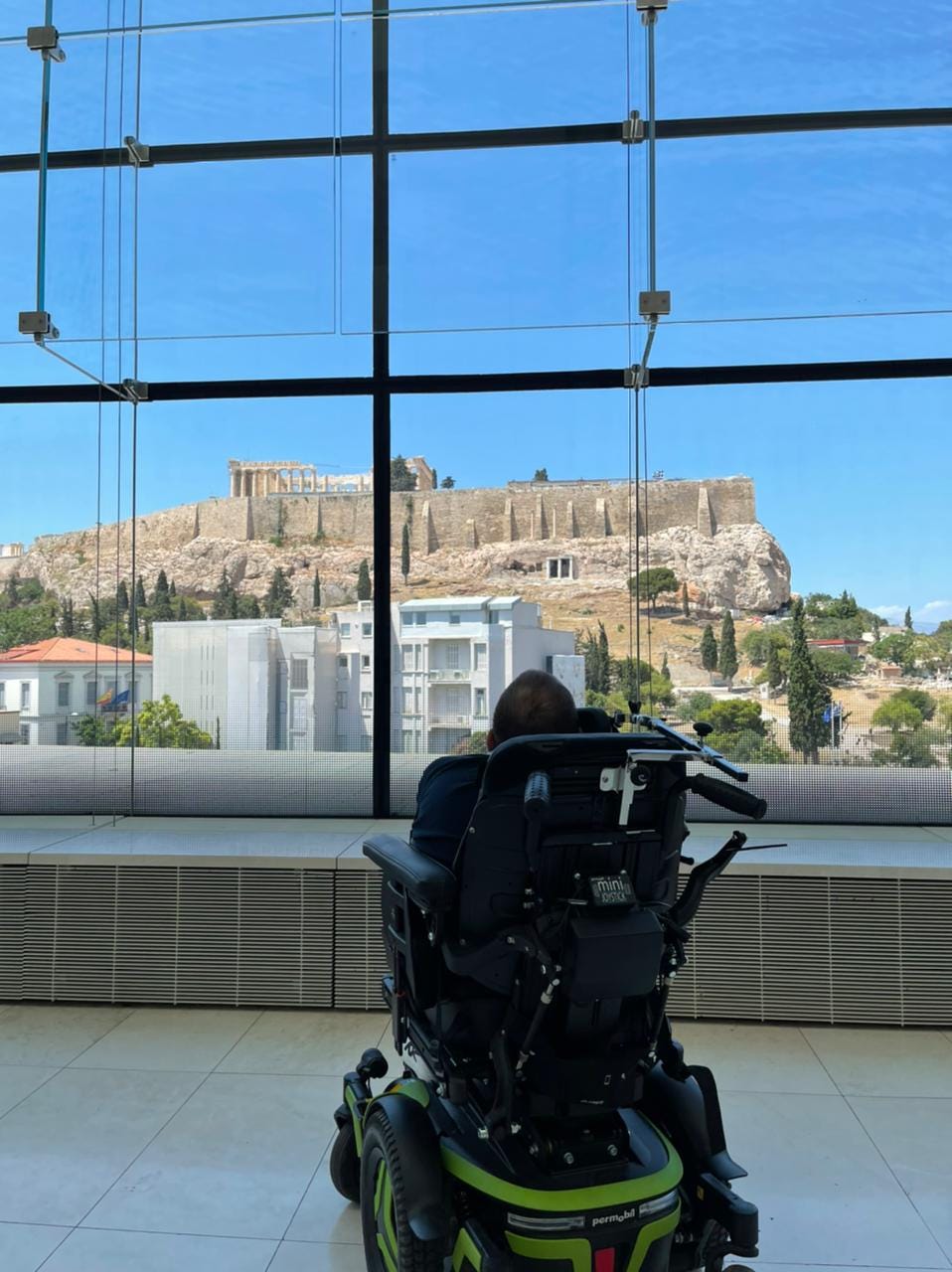
As I mentioned in my previous article, the Acropolis is wheelchair accessible. Its accessibility was significantly improved with the introduction of a new elevator and new accessible paths (not without complaints by some people, but that’s Greece’s national hobby). Having the elevator is a game changer (if it works, which is not the case quite often unfortunately), and since it’s transparent the journey up comes with a great view. Of course, the view gets even better once you reach the top!
For me, there is something special about being able to roll in monuments that have been standing there for thousands of years (I felt something similar in Egypt for example - I need to write about it too). I cannot really explain it with words, but the feeling is very unique.
One thing I would keep in mind, especially if you are visiting during the summer, is the heat. There is limited shade on the Acropolis and the stone and marble can become extremely hot. If you have flexibility, an early morning or later afternoon visit may make the experience much more comfortable, though to be honest I am not sure that the elevator operates all hours, so better to double check.
Before or after visiting the Acropolis, you can also roll around the hill along Dionysiou Areopagitou Street. This pedestrian street is one of the nicest places for a stroll in central Athens, though might get a bit tiring for wheelchair users, especially on a hot day. I have a friend from abroad that still reminds me how I almost killed her there under almost 40 degrees some years ago. But at least I compensated her with a good souvlaki afterwards!
This street will also take you to the Acropolis Museum, which, needles to say, is a must. By the way, soon will open again the old Acropolis museum on the hill too, for which I am very much looking forward.
And if you’re interested in more ancient stuff, you can continue towards the Odeon of Herodes Atticus, sitting right beneath the Acropolis. It is a Roman theatre built in 161 CE, renovated in the 1950s and now closed again for a new round of renovation, so unfortunately for the next few years you will be able to see it only from the outside. But it is still worth it.
The theatre is wheelchair accessible, though with limited places, and (when open) during the summer it hosts many concerts and performances as part of the Athens Epidaurus Festival. With my sister we have a tradition to try to watch at least one opera performance each season.
Plaka, Monastiraki and Psyrri
If you want to experience the atmosphere of central Athens, Plaka, Monastiraki and Psyrri should definitely be on your list. They are next to each other, but each has its own character.
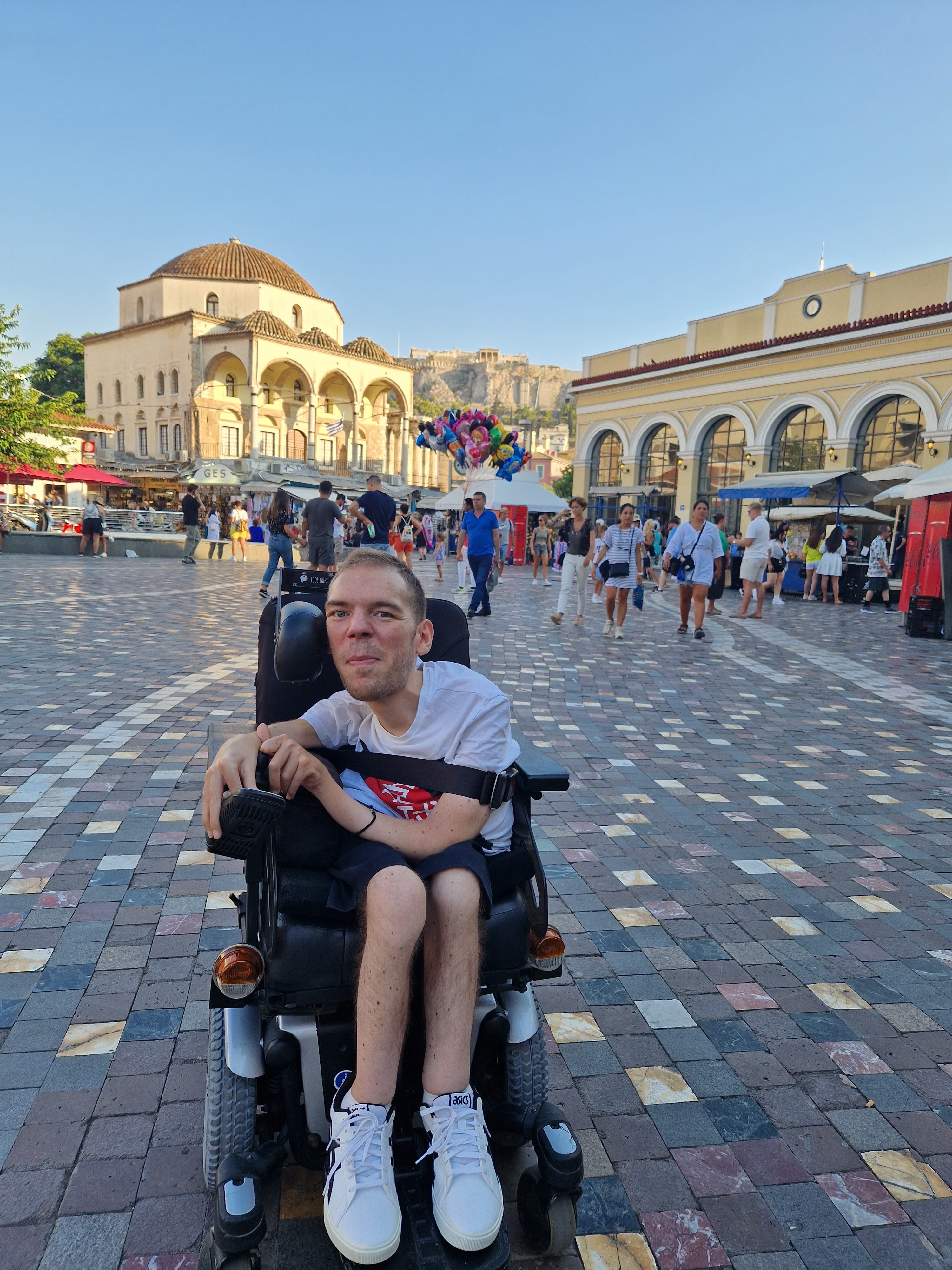
Monastiraki is one of the liveliest parts of the city, with its famous square, flea market, shops, cafés and restaurants, and the Acropolis visible above the buildings. It can get very crowded, and as a wheelchair user you may encounter questionable accessibility, cobblestones and narrow streets, but I still think it is worth exploring.
From there, you can easily continue to Plaka, the historic neighbourhood below the Acropolis. Its narrow streets, small souvenir shops and traditional tavernas give you a taste of old Athens. Accessibility can be challenging here too, but whenever I am in the area I enjoy rolling and feeling the atmosphere. Needles to say it’s a bit of a tourist trap, but ok, you would expect that.
Just next to Monastiraki, is another lively neighbourhood worth exploring, called Psyrri. It is known for its street art, small bars, cafés and restaurants. I wouldn’t call it beautiful, it has narrow streets and it is not that accessible with a wheelchair, but it has a great vibe, particularly in the evening.
Vasilissis Sofias Avenue and Athens’ Museums
Starting from Athens city centre, so the Syntagma Square, Vasilissis Sofias Avenue is home to some of Athens’ most interesting museums (and some other important buildings), and in my opinion it is one of the most beautiful streets of the city.
As I mentioned in my previous article, many of the major museums are accessible. This avenue is also relatively accessible and pleasant to navigate compared with many other parts of Athens. Its sidewalks are generally more spacious for Athenian standards, and many of the ramps are usable.
If you are coming from the direction of the Syntagma Square, you will first pass by the Greek Parliament and then you will see various great museums.
The Benaki Museum of Greek Culture, is one of my recommendations if you want to understand Greek culture beyond the ancient monuments. Its collection covers different periods of Greek history, art and everyday life. A little further is the Museum of Cycladic Art, very cute and among my favorites, which has both permanent and temporary exhibitions (though part of the temporary is not accessible). It is a great opportunity to discover Cycladic art, and has a lovely café.
Across the road, you will find the Byzantine and Christian Museum. It is an interesting place to explore if you want to learn more about the Byzantine period and the history of Christianity in Greece, but the reason I love it is because it has one of the nicest cafés in Athens, with a beautiful garden. A small oasis in the city (it has a small step in the entrance, but it’s manageable). Right next to it is the War Museum of Athens. If military history, aircraft and military equipment are your thing, you’ll probably enjoy this one. I remember, during my university years I did an assignment on this museum with one of my classmates. We selected it because everyone else wanted to do the Acropolis Museum or the Archeological one (you should visit it too by the way), so we wanted something unique, and it paid off.
Continuing, you’ll find the National Gallery – Alexandros Soutsos Museum, which was renovated and reopened some years ago and it’s another one of my favorites. If you love art, this one is definitely worth a visit. Its collection includes works by some of Greece’s most important artists. Nearby, the Athens Concert Hall, known as Megaron, is another interesting stop, offering a glimpse into Athens’ cultural life and adding a different atmosphere to the neighbourhood. It’s close to were I live so I try to attend its events when I can.
The National Garden and Panathenaic Stadium
If you need a break from the traffic, noise and crowds of central Athens, one option is to head to the National Garden, right next to Syntagma Square. It is a completely different side of the city. You can escape the busy streets, enjoy some nature and simply slow down for a while. In the past it used to have a zoo too, but nowadays the National Garden is home to ducks, turtles and fish in its ponds and to numerous birds flying between the trees. I think there are some goats too. When I was a kid it had even a lion, but now things have changed (and that’s good).
For me, places like this are important for a city. Sightseeing is nice but can be tiring, and sometimes the best thing to do is simply find somewhere pleasant to sit, relax and watch the people pass by.
Accessibility can vary depending on the route and surface, so I wouldn’t expect every path to be perfect. But it is more than doable and worth exploring.
And just next to the National Garden is the Panathenaic Stadium, also known as Kallimarmaro, a magnificent marble stadium that hosted the first modern Olympic Games in 1896 and one of Athens’ most iconic landmarks. I enjoyed a wonderful concert there last year.
Stavros Niarchos Foundation Cultural Center
Leaving the historic centre, one of my strongest recommendations is the Stavros Niarchos Foundation Cultural Center (SNFCC). The complex is home to, among other things, the National Library of Greece and the Greek National Opera. But you don’t have to attend a performance or visit the library to enjoy it.
The whole area is a great place to spend a few hours. It has excellent accessibility (it was taken into account when it was built), open spaces with greenery, water features and plenty of places where you can simply relax. If you’re lucky, you may also find one of the many events taking place there.
The only downside is that there is no metro going there, so it’s a bit of pain, but the Foundation has an accessible shuttle service from the city’s centre, upon request, which is great and shows their commitment to include everyone.
Shopping Malls
If shopping is your thing, and you’re looking for something beyond souvenirs and local products, the city’s shopping malls are generally an easier option from an accessibility perspective (even though you can try Ermou street starting from Syntagma Square too, which is the main shopping street of the city, but with limited accessibility).
I most often go to Athens Metro Mall. It is smaller than some of Athens’ other major shopping centres (like The Mall Athens, or the Golden Hall, among others), but its biggest advantage is its location: it is directly accessible by metro at Agios Dimitrios station, which for me is important.
Apart from the shops and the food options, there is also a cinema, so it can be a useful option if you want to escape the heat, or simply take a break from sightseeing.
Flisvos and the Athens Riviera
And finally, let’s go to the sea! We are in Greece after all!
One thing that sometimes surprises visitors is how close the sea is to Athens. You don’t need to travel to a Greek island to enjoy being by the water. The Athens Riviera stretches along the coast south of the city, and Flisvos Marina is one of the places where you can enjoy it. You can roll around the marina, look at the boats and simply enjoy being by the sea. To be honest, I am not often there because it’s not super easily reached by public transport, but I recommend it if you have the opportunity to go.
Nearby, you can also see the Georgios Averof, a historic Greek Navy battleship that now operates as a floating museum. As far as I know, however, it is not wheelchair accessible, so this is more of a sight to see from the outside.
The atmosphere around Flisvos is very different from the historic centre. After spending hours around ancient monuments and busy streets, sometimes you want to sit by the sea and relax with an ice cream or a drink.
By the way, Athens has numerous beaches, accessible with SEATRAC too, but I am not a fan of the “sport”, so can’t help you much with this.
And, of course, food!
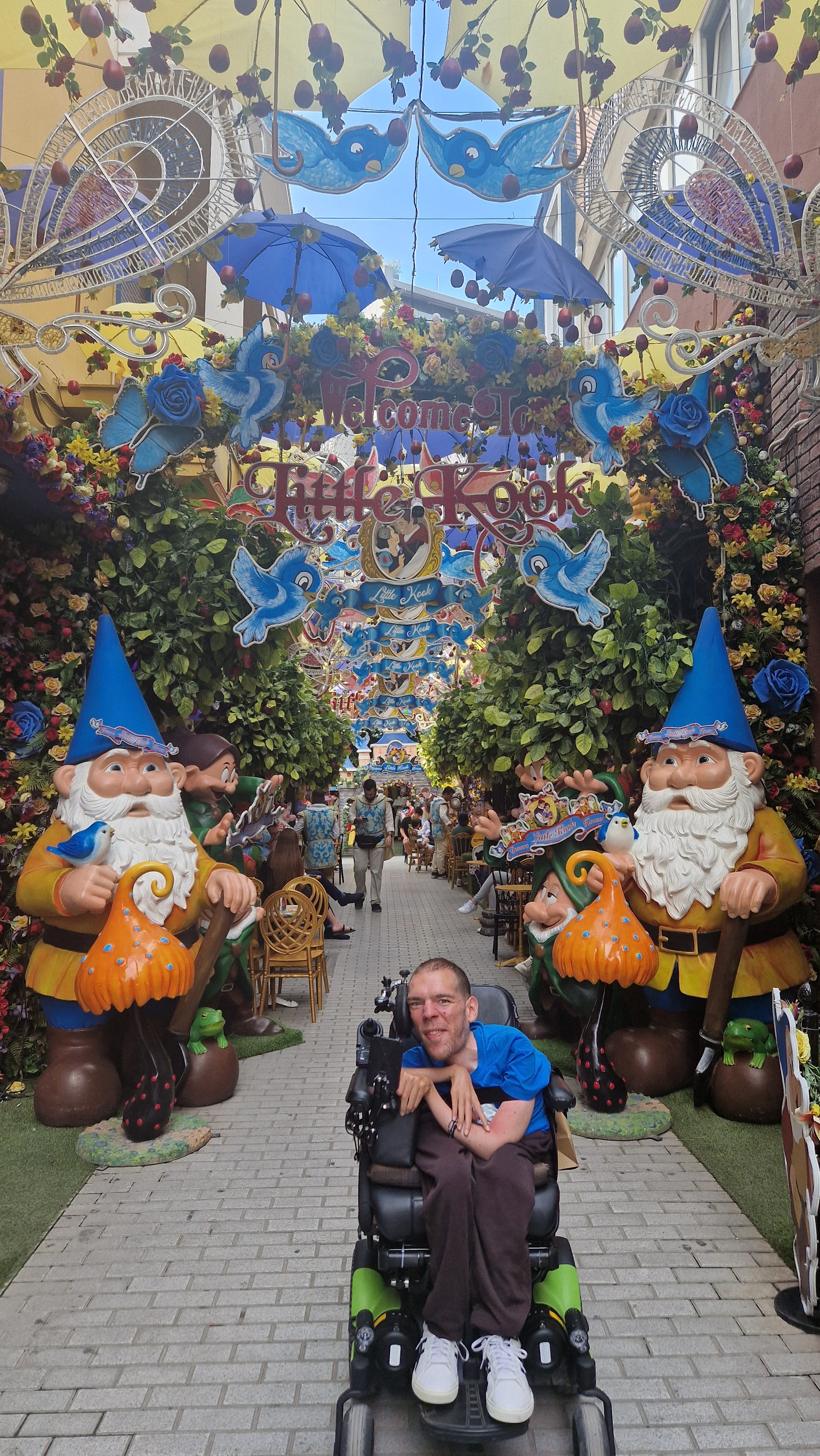
No visit to Athens would be complete without trying some Greek food.
I haven’t turned this article into a restaurant guide because accessibility can change and I don’t want to promote specific restaurants and bars, plus that you can eat very well almost everywhere. But while you’re here, make sure you try some of the classics: souvlaki, Greek salad, moussaka, tzatziki, fresh fish and, if you like sweets, baklava, galaktoboureko, loukoumades, kataifi, spoon sweets and ice cream with mastic. I don’t drink alcohol but Greek wine is famous too.
I would say that the most important is the taverna experience, sometimes with live Greek music. Just be aware that accessibility varies from one restaurant to another, particularly when it comes to toilets, but thanks to the good weather you can usually sit outside.
Final thoughts
These are some of the places I have visited and enjoyed in Athens, but they are certainly not the only ones. For example Maria Callas Museum, various neighbourhoods, squares, parks, sports venues, churches and buildings are worth visit too.
And, to tell you the truth, writing these two articles has made me realise that despite living here, I haven’t explored my own city as much as I would like to. Like many people, I often get excited about travelling somewhere new while forgetting that there are still places to discover at home (to be honest, sometimes it is also easier to travel abroad).
So perhaps writing these guides will turn me into a tourist in Athens again, and I think that I will visit a museum and just wander around, eating in a random restaurant soon!
Athens still has a long way to go before it can be considered a truly accessible city. But that doesn’t mean you shouldn’t visit it. With some preparation and a little patience it is absolutely possible to enjoy the city in a wheelchair. If you need some professional help, don’t hesitate to get in touch with Care under Sun, a company specialising in accessible tourism in Greece.
I hope these guides help you do that, and don’t hesitate to get in touch with me here, on Instagram, on Facebook or on X, if you have any questions or need more information!